

Exploring Our Social Principles Through Conversation
Structured Conversations at AC 2026 – Saturday at 10:45 AM EST
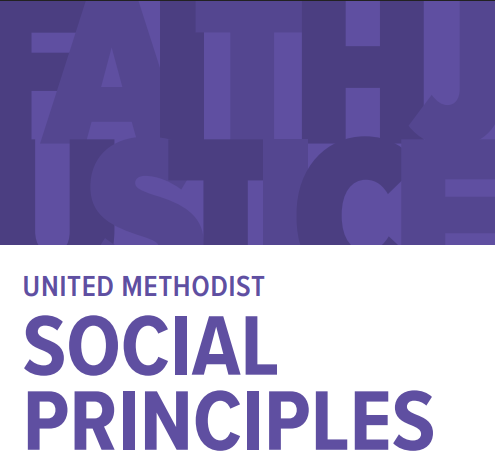
As United Methodists across the connection are exploring our shared identity, this year’s Annual Conference, in partnership with the Michigan Conference Board of Justice, is offering an opportunity to do the same. On May 30, Annual Conferece attendees are invited to LOVE BOLDLY by engaging in powerful conversations centered on our new Social Principles.
The Social Principles reflect the United Methodist response to today’s most pressing social issues and address concerns across the diverse contexts of the worldwide church. Thousands of United Methodists from various backgrounds offered input to recognize both their own communities and those across the connection.
Wisdom and Witness conversations will help us to better understand what we collectively believe as United Methodists and empower churches to bring this understanding and action into local communities and the world.
Participants will choose ONE of four topics to explore under the guidance of experienced facilitators with expertise on the topic, and equipped to lead large-group discussions. Through these dynamic sessions and open dialogues, attendees will walk away with inspiring action steps to take back to local churches!
4 Social Principles Conversation Topics
Community of All Creation
Facilitated by Audra Hudson Stone and Jacob Stone
This session will engage participants in a theological grounding for creation care, the realities of harm to people and planet wrought by environmental degradation, and the ways our church calls for creation stewardship and justice as an expression of faith.
Food Justice
Facilitated by Alice Fleming Townley and the Advocacy Day Team
This session will invite particpants to reflect on art, scripture, and social principles; the difference between charity and justice; and lessons from Advocacy Day.
Universal Accessibility
Facilitated by Michelle King and Christy Miller White
In our congregations we have a diverse population of people with a wide variety of needs. Together we will discuss the desire to provide accessibility to our communities while addressing the practical realities our churches face.
Racism, Ethnocentrism, & Tribalism
Facilitated by April Gutierrez & Matt Weiler
The Co-Convenors of the Michigan Conference Anti-bias / Antiracism Working Group along with numerous facilitators will foster conversation that seeks to build our capacity to talk about race and racism through a Wesleyan Theological lens. This structured time will include personal reflection on case studies, and guided conversations that move us from AWARENESS to REPENTANCE to RESISTING RACISM.
Text of the 4 Social Principles Conversation Topics
Community of All Creation: Creation in Peril
We acknowledge that unsustainable human activities have placed the entirety of God’s creation in peril. Further, we confess that the degradation and wholesale destruction of the natural environment threatens unprecedented harm, bringing danger to human and nonhuman life alike.
A. Destruction of Ecosystems – Whether human beings are conscious of it or not, we are participants in and beneficiaries of complex natural ecosystems made up of myriads of symbiotic relationships between living organisms such as animals, plants, insects and microorganisms, and the physical environs they inhabit, including air, water and soil. Overconsumption, shortsighted policies, poor management of natural resources, and other unsustainable practices have severely impacted the fragile, natural ecosystems on which all of life depends. Too often, humankind has treated the rest of the created world as if it were disposable and allowed the destruction of other living organisms and their natural habitats to go unchecked. Further, the experiences and voices of people most at risk have largely been ignored.
B. Global Warming and Climate Change – Global warming and climate change are already creating extreme conditions that threaten the entirety of life on earth. Over industrialization, widespread deforestation, and overreliance on fossil fuels are but some of the human activities that have contributed to the buildup of greenhouse gases such as carbon dioxide, methane, and nitrous oxide in the earth’s atmosphere.
A sharp upsurge in greenhouse gases over past decades already has resulted in a steady rise in sea levels, growing acidification of the world’s oceans, increased droughts and famines, and the intensification of extreme weather events. Climate scientists warn that the window of opportunity for reversing the negative effects of global warming and climate change is rapidly closing. Without concerted action by individuals, churches, communities, shareholders, businesses, governments, and international organizations, the negative effects will become irreversible.
C. Dependence on Fossil Fuels – The burning of fossil fuels, including coal, oil and, to a lesser extent, natural gas, is the greatest single contributor to the buildup of greenhouse gases and the consequent warming of earth’s atmosphere. To reverse the current trajectory of global climate change, increased investments are needed in the research, development, and distribution of alternatives to fossil fuels, including, but not limited to, solar, wind, geothermal and hydrogen-based energy sources.
In pursuing alternatives to fossil fuels, it is critical to avoid solutions that would worsen current problems or create new, unforeseen environmental challenges. Reliance on nuclear energy, for example, raises considerable concerns regarding the safe storage and containment of radioactive waste.
Similarly, recent proposals to reduce the buildup of greenhouse gases by geoengineering earth’s biospheres, including its land, air and water, risk unpredictable side effects and the further destabilization of the natural ecosystems on which all life depends.
Inevitably, transitioning from an overreliance on fossil fuels will have adverse impacts on individuals and communities whose livelihoods are still heavily dependent on the production, sale and distribution of these commodities. To the greatest extent possible, plans for developing and deploying alternative sources of energy should minimize negative financial impacts by investing in strategies that support people in successfully transitioning to new employment, strengthen the social safety net to deal with the loss of jobs and income, and provide ample educational and retraining opportunities.
Food Justice
Food systems that are ecologically sustainable, locally oriented, and equitably distributed are urgent priorities. We endorse policies and practices designed to ensure access to healthy nourishment and clean drinking water, especially for communities that have been subjected to environmental degradation or deprived of adequate resources to produce or purchase their own food.
We also affirm food sovereignty, which promotes the rights of all people to healthy, culturally appropriate food, produced through ecologically sound and sustainable methods. We support local control of food production, which entails providing opportunities for local communities to participate meaningfully in decisions about the kinds of livestock to be raised and crops to be grown. We reject agricultural policies and practices that make food inaccessible to agricultural workers and the communities in which the food is produced. We advocate for strong protections of the land, food, and water rights of indigenous peoples.
We oppose the patenting of seed varieties and other organisms traditionally used in farming and agriculture. The rapidly expanding practice of patenting seed varieties and charging farmers for their use has reduced access to traditional crops and increased the indebtedness of subsistence and smaller-scale farms. Consequently, we support cooperative, open-source efforts aimed at making traditional seed varieties available to those who need them.
We also call for the creation of policies that reduce carbon-intensive agricultural methods, which increase climate change. Producers must be responsible for their adverse impact on food packaging, distribution and transport, and seek the safety and well-being of agricultural and food processing workers.
Racism, Ethnocentrism, Tribalism
We condemn racism, ethnocentrism, tribalism, and any ideology or social practice based on false and misleading beliefs or ideologies that one group of human beings is superior to all other groups of human beings. Additionally, we utterly reject laws, policies and social practices that marginalize, discriminate and/or encourage the use of violence against individuals, communities or other social groups based on perceived racial, ethnic or tribal differences.
We call on congregations and on pastors, bishops, and other church authorities to educate themselves about the root causes and manifestations of racism, ethnocentrism, and tribalism within communities of faith and to develop strategies for overcoming these kinds of social divisions. We likewise urge governments, businesses, and civil society organizations to renounce statements, policies, and actions aimed at promoting exclusion, discrimination and violence.
Universal Accessibility
(Title in Social Principles is People with Disabilities)
We affirm the full humanity and acknowledge the gifts of people living with disabilities. We call for the elimination of all barriers that prevent people with disabilities from participating fully in the life of local congregations and the broader society. Though no one term has gained universal acceptance throughout our global connection, “people with disabilities” refers to a broad group of people living with distinctive cognitive, physical, developmental, sensory, neurological, intellectual, and psychological conditions or challenges.
We lament that the church has often stigmatized and discriminated against people with disabilities by imposing labels with negative connotations, by failing to make space in church life for the full range of God’s people, and by interpreting words such as “blind,” “lame,” and “deaf” in pejorative ways. Because of this, people with disabilities are frequently dismissed or undervalued, both in the Church and in civil society. In response, we call the church to acts of repentance, to earnest listening, and to a collaborative ministry with people with disabilities so they can contribute their wisdom and gifts to the mission and ministry of local congregations and other church bodies.
We likewise call on civil society, business, and government leaders to work toward the removal of all barriers and to provide opportunities for those with disabilities to make their unique contributions to the entire society. We call for the protection of the rights of all people with disabilities, including the rights to health care, employment, education, housing and transportation, and to freedom from discrimination.
Resources and other information about the Social Principles of The United Methodist Church can be found at umcjustice.org.